Sub-q injection technique: where, how, and what not to do
Subcutaneous injection in plain language. Sites, angles, rotation, and the small things that prevent bruising.
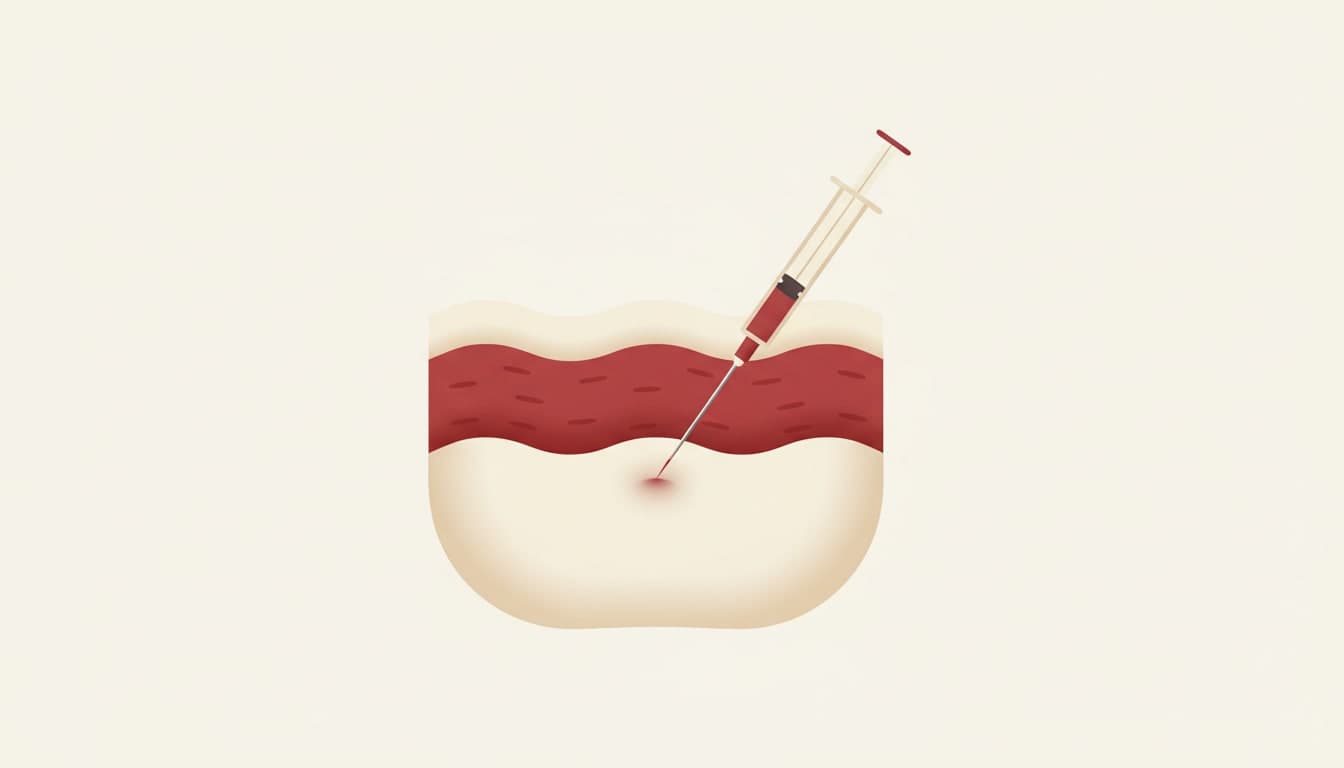
Subcutaneous (sub-q) means under the skin, into the fat layer, not the muscle. Most peptides are sub-q.
Best sites: lower abdomen (2 inches away from the navel), love handles, outer thigh, back of upper arm if someone else is doing it.
Pinch the fat between your thumb and finger. Insert the insulin needle at a 45-degree angle if you are lean, 90 degrees if you have more fat. Push slowly. Withdraw straight out. Apply gentle pressure with a clean cotton ball or alcohol pad for 10 seconds.
Rotate sites every injection. Same site every day causes lipohypertrophy (lumps under the skin) which messes up absorption.
To prevent bruising: do not aspirate (no need to pull back), inject slowly (over 3-5 seconds), avoid visible surface veins, ice the spot for 30 seconds before if you bruise easy.
If you hit a small vein and a drop of blood appears, it is not a problem. Apply pressure, move on. If a real bleed happens, hold pressure for a full minute.
Safe needle handling: use a sharps container, never recap and reuse, never share. Insulin needles cost cents.
Get the free peptide research checklist
Drop your email and we'll send you the one-page checklist for vetting any peptide before you trust a vendor or a forum: what to verify, the red flags, and the questions to ask a licensed provider. No card.
No spam, and we never sell your email. Just the checklist. Email support@pepdex.co to opt out any time.
Membership computes it once for your exact vial and saves it, and the AI Coach answers questions about your specific stack, missed doses, timing, what to watch. from $4.99/week or $29.99 for a full cycle.
Get your exact numbers →Related guides
What each administration route actually means, why peptides are matched to specific routes, and how to read 'route' on a peptide entry.
What 'units' means, why peptide doses are talked about in units instead of mL, and how to read the markings.
The exact steps for mixing bacteriostatic water with a lyophilized peptide vial. Sub-q, IM, and intranasal, what changes for each.