Reconstitution calculator
Pick your peptide, vial size, and BAC water. Get exact units to draw on a 1 mL insulin syringe, with documented dose ranges and a one-click add-to-stack.
Pick your peptide
Type to search, or pick from the dropdown. Auto-fills the recommended vial size and dose tier.
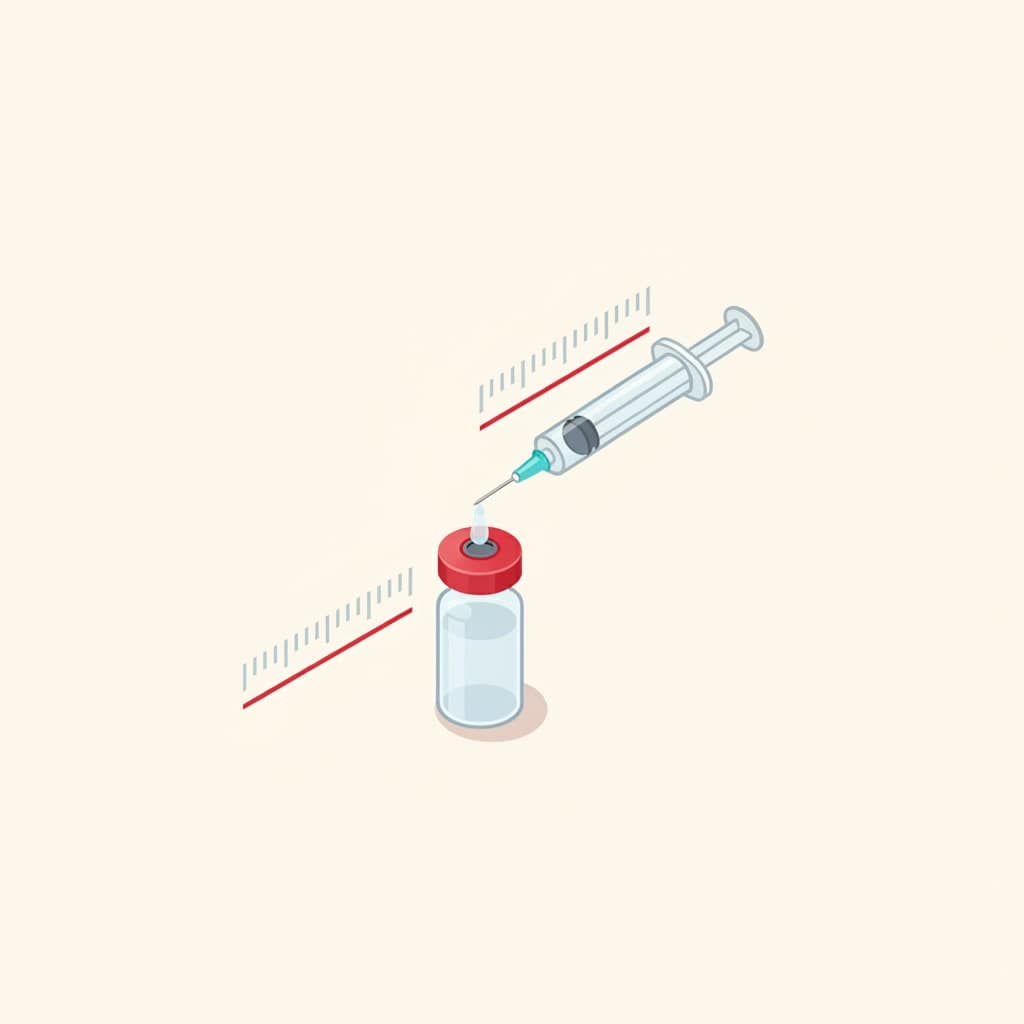
- • Standard insulin syringe = 100 units total
- • Small markings = 1 unit each
- • Large markings = 10 units (0.1 mL)
- • 100 units = 1 mL
Always verify reconstitution math against a second source before any dose you actually inject.
Per-drug reconstitution calculators
Each one has a units chart for that compound’s vial sizes, how it is supplied, its half-life and what people track with it.
Peptide reconstitution chart
Strength of the mix for common vial sizes and BAC water volumes, and how much peptide sits in one unit of a U-100 insulin syringe (100 units = 1 mL). It works for any peptide: only the mg and the mL matter.
| Vial | 1 mL BAC water | 2 mL BAC water | 3 mL BAC water |
|---|---|---|---|
| 2 mg | 2 mg/mL1 unit = 20 mcg | 1 mg/mL1 unit = 10 mcg | 0.67 mg/mL1 unit = 6.7 mcg |
| 5 mg | 5 mg/mL1 unit = 50 mcg | 2.5 mg/mL1 unit = 25 mcg | 1.67 mg/mL1 unit = 16.7 mcg |
| 10 mg | 10 mg/mL1 unit = 100 mcg | 5 mg/mL1 unit = 50 mcg | 3.33 mg/mL1 unit = 33.3 mcg |
| 15 mg | 15 mg/mL1 unit = 150 mcg | 7.5 mg/mL1 unit = 75 mcg | 5 mg/mL1 unit = 50 mcg |
| 20 mg | 20 mg/mL1 unit = 200 mcg | 10 mg/mL1 unit = 100 mcg | 6.67 mg/mL1 unit = 66.7 mcg |
| 30 mg | 30 mg/mL1 unit = 300 mcg | 15 mg/mL1 unit = 150 mcg | 10 mg/mL1 unit = 100 mcg |
| 50 mg | 50 mg/mL1 unit = 500 mcg | 25 mg/mL1 unit = 250 mcg | 16.67 mg/mL1 unit = 166.7 mcg |
Example: a 10 mg vial mixed with 2 mL is 5 mg/mL, so 1 unit holds 50 mcg and 250 mcg is 5 units.
How the math works
- Strength (mg/mL) = vial mg ÷ mL of water. 5 mg in 2 mL is 2.5 mg/mL.
- mL to draw = dose mg ÷ strength. 0.25 mg ÷ 2.5 mg/mL = 0.1 mL.
- Units = mL × 100 on a U-100 insulin syringe. 0.1 mL is 10 units.
mg and mcg. 1 mg is 1,000 mcg. Vials are labeled in mg and many peptide amounts are written in mcg, so 250 mcg is 0.25 mg. Mixing the two up is an easy way to be off by 1,000 times.
Very small draws. Under about 2 units is hard to read between the syringe marks. Mixing the next vial with more water makes the same dose a bigger, easier draw.
Reconstitution calculator FAQ
- How do you calculate peptide dose in insulin syringe units?
- Reconstitute the vial with bacteriostatic water, then work from the concentration. Concentration equals total peptide (mcg) divided by water added (mL). On a 1 mL (100-unit) insulin syringe, units to draw equals your dose in mcg divided by the concentration, times 100. The calculator does this from your vial mg, water mL, and dose.
- How much bacteriostatic water do I add to a peptide vial?
- There is no single correct amount. More water gives a more dilute mix and a larger, easier-to-read draw; less water gives a smaller draw. Common choices are 1 to 5 mL. The calculator shows the resulting concentration and syringe units for whatever amount you pick, so you can choose a volume that lands at a readable draw.
- How do I convert mg to insulin units for semaglutide or tirzepatide?
- Milligrams describe the dry powder in the vial; insulin units describe the volume drawn on the syringe, so there is no fixed conversion without knowing how much water you mixed. Enter the vial mg, the water mL, and your dose, and the calculator returns the exact units to draw.
- Is the Pepdex calculator free?
- Yes. The reconstitution and dose math is free with no account needed. A free account includes 10 AI Coach messages a day. Saving protocols to your Personal Stack requires membership. Pepdex for iPhone also has free calculators and a reference catalog, with ongoing tracking available through Pro.