
Peptide storage: fridge, freezer, room temp, and what kills product
How to store lyophilized vs reconstituted peptides so you do not throw money away.
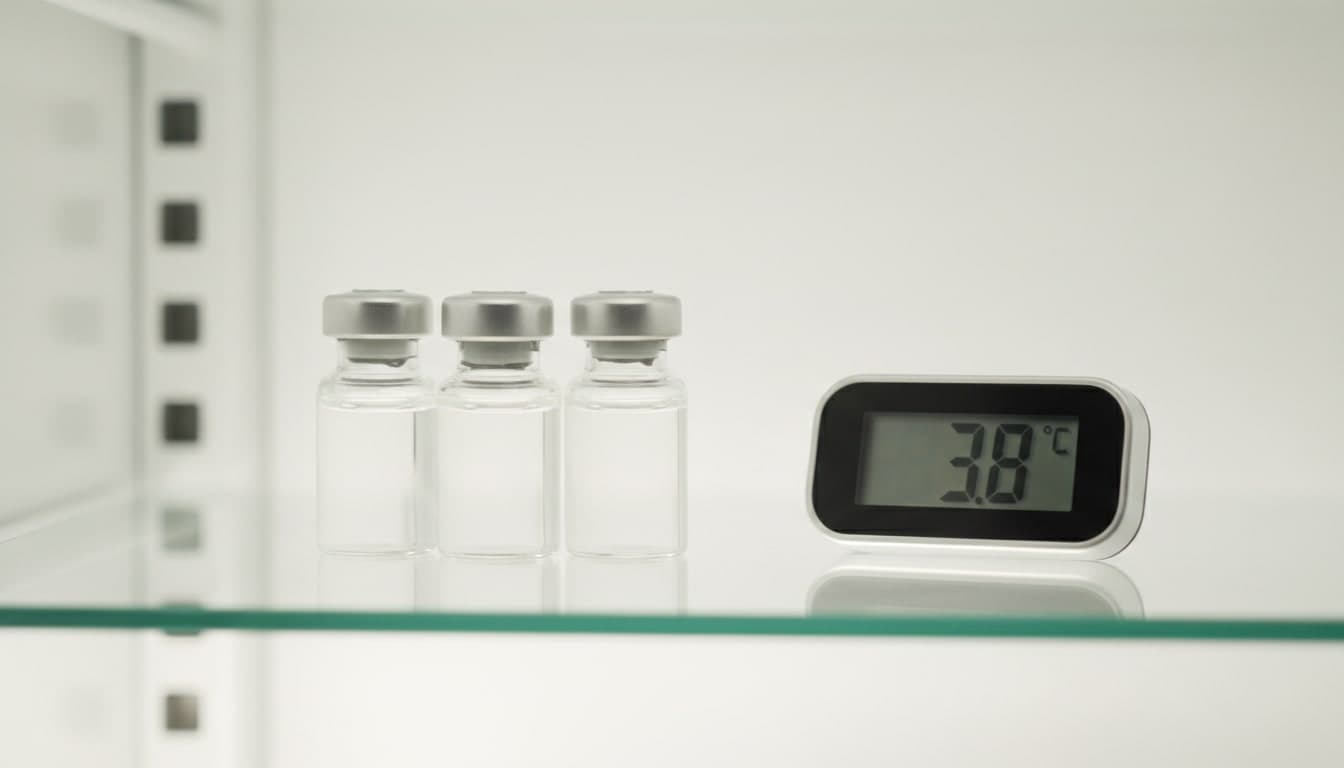
Lyophilized (powder) peptides: Refrigerate at 2-8°C for short term storage. Freezer for long term (months to years). Most peptides remain stable lyophilized for 18-24 months in a freezer. Do not freeze and thaw repeatedly.
Reconstituted peptides: Refrigerate immediately after mixing. Do not freeze reconstituted peptides, freezing degrades structure.
Stability windows reconstituted (general guidance, check vendor data sheets): BPC-157: 7-14 days TB-500: 30-60 days GHK-Cu: 30 days (use glass, copper binds plastic) Ipamorelin / CJC-1295 (no DAC): 14-30 days Semaglutide / Tirzepatide / Retatrutide: 30-60 days
Things that destroy peptides: heat, light, foaming, repeated freeze-thaw, contamination from reused needles.
Travel: fridge gel pack in a small insulated bag. Sub 24 hours at room temp is usually fine for the GLP class. For everything else, keep it cold.
If you suspect a vial has gone bad: cloudy solution, color change, visible particles, smell. Toss it. Do not inject.
Get the free peptide research checklist
Drop your email and we'll send you the one-page checklist for vetting any peptide before you trust a vendor or a forum: what to verify, the red flags, and the questions to ask a licensed provider. No card.
No spam, and we never sell your email. Just the checklist. Email support@pepdex.co to opt out any time.
Membership computes it once for your exact vial and saves it, and the AI Coach answers questions about your specific stack, missed doses, timing, what to watch. from $4.99/week or $29.99 for a full cycle.
Get your exact numbers →Related guides
The exact steps for mixing bacteriostatic water with a lyophilized peptide vial. Sub-q, IM, and intranasal, what changes for each.
Check any peptide source yourself: what Reddit threads actually prove (and what they don't), how to match a COA to a lot number, and the 9 red flags that mean walk away. No vendor names, no guessing.
What each administration route actually means, why peptides are matched to specific routes, and how to read 'route' on a peptide entry.